Hey Michelle, I hear you’re committed to fighting childhood obesity. Can you lend a hand?
I’ve been trying to quash bad food practices at my daughter’s elementary school for several months, and I’m not talking about cafeteria food because that’s a bigger fight. I’ve simply been trying to get the school principal and the “wellness committee” to eliminate junk food in the classroom.
You’d think I was calling for the end of the slide ruler or the No. 2 pencil.
Specifically, I want to put an end to the Dunkin’ Donut fest every time a child has a birthday and to stop the practice of distributing junk-filled goody bags on every holiday.
I understand parents have a strong desire to incorporate festivities into children’s lives but why not change the way we do that? Why not offer children healthy choices? As the First Lady is saying, this is the time to tackle the health crisis, and what better place to begin than at elementary schools?
Recently I thought I’d made progress on this front, after embarking on a campaign for change. On February 4th, the principal sent home a note to parents requesting they refrain from sending treats on Valentine’s Day. Cards, she wrote, are a better option.
There was even a second, more emphatic note that said: “NO CANDY OR TREATS OF ANY KIND.”
I couldn’t believe it. I whooped with joy. My daughter and I did a victory lap and high-fived in the kitchen. She’s seven, but she’s all for making her school a healthier place.
The blue skies didn’t last.
Within 24 hours, the principal caved. In a note sent home the next day she wrote, apologetically “parents have shared that they have already prepared cards including small treats… In recognition of this dilemma, children may…exchange cards with small treats.”
Who is this principal afraid of? Why wasn’t she able to find the backbone to stand by her decision?
The answer is fear. Fear of taking on some unspoken sacred American entitlement that says it’s better to ply kids with crap than to embrace smarter, healthier food policies. It seems it’s easier to dismiss me as the crazy lone loon who is trying to deny children the pleasure of being children.
I know that the principal understands the First Lady when she says, “nearly a third of children in this country are either overweight or obese and a third will suffer from diabetes in their lifetime.” Yet my principal and likely many others are afraid to take baby steps.
Recently, to help the principal see what’s wrong with feeding Dunkin’ Donut munchkins to children, I sent her and our wellness committee an email that said:
A munchkin, made with artificial colors and artificial flavors, has 60 calories. Half of the calories are derived from fat. A single munchkin has 11% of the saturated fat suggested for a child’s daily diet. THAT’S ONE MUNCHKIN. They also have partially hydrogenated oils (transfats) and TBHQ, a product made from butane. (This information was taken straight from the Dunkin’ Donuts’ web site).
Ironically the butane is used to hide the bad taste of chemicals.
She need only glance around in my daughter’s classroom or in the school’s halls to know that every classroom experience involving food is either an opportunity taken or missed.
I have found that administrators and wellness committee members vacillate between reason and absurdity. More than once I’ve been told that by giving children these foods in the classroom, they are learning how to make “choices”. When the choice is either a chocolate or frosted munchkin, no good decision is possible.
My generation grew up in an era when we never thought about what we put in our mouths. Certain candies and treats became associated with fun and love. My peers feel as though they are depriving their children of love if they do not provide these experiences.
Maybe I’m not a sentimentalist but I know there are plenty of healthy ways to celebrate life’s small moments, without filling my daughter’s digestive system with chemicals, preservatives, additives and food coloring.
If Michelle Obama hopes to make inroads she’s got to convince principals like mine to make a connection between science and policy.
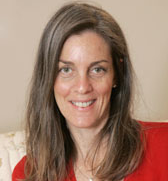
Tina Traster writes the New York Post’s “Burb Appeal” column and the “The Great Divide” at HuffingtonPost.com.


Thanks for that posting Bill.
Transforming cafeteria school food will be an uphill battle. Like everything else in the country, change is near impossible when you’re fighting corporations, lobbyists and everyone else who has a grip on politicians and a stake in the status quo. I know this is not entirely possible but one way to make change would be to boycott cafeteria food. (For full disclosure, I admit that I pack my daugther’s lunch every day).
But consider this: if parents in this community would speak up and let Valencia Douglas and wellness committee director Joe Sigillo and Amy Applebaum know how they feel about this issue, then maybe we could do more than write and blog about it.
Interesting piece on nutrition… http://www.salon.com/food/feature/2010/02/16/open2010_michelle_obama_school_lunches/index.html?source=newsletter
I think Bill and Magwitch have good points about allowing treats in reasonable moderation and remembering the positive social bonds we shared around sweets when we were younger.
But a sober reading of our health stats today shows we are not talking about the same thing anymore. Ice cream containing cane sugar is not the same as high fructose corn syrup or genetically engineered sweeteners that use our children as guinea pigs.
It’s obvious this generation is less healthy than previous generations when juvenile diabetes, chronic obesity and food allergies were rare or nonexistent.
Our doctor and our dentist have been pretty forceful in telling us to cut out sweets because children form their eating habits pretty early and it’s extremely hard to reverse later. It’s hard enough for me, but I’m onboard mostly for my children so I will work hard to eat more food and less chemicals.
I went to a Girl Scout ‘Sweetheart Dance’ last night, with my daughter. We were all supposed to bring a snack. I was horrified by what I saw- boxes of Dunkin Donuts, sugary frosted cookies, lemonade. Sugar, sugar and more sugar.
We are raising a nation of diabetics with these horrible eating practices that are taught and marketed to our children. And yes, government should absolutely play a role in solving this. This is a public health crisis that is totally avoidable, and can be solved cheaply, with public education and will. Plus, the health problems that are caused by these dietary problems play a huge role in the spiraling health care costs that we are all paying for. Government has a duty to lead the way towards healthy eating. Taxpayers should be demanding it- even those of us who are making good choices end up paying for those who don’t- through higher taxes and insurance premiums.
Bill Demarest – well said!
Well, I kind of lean towards Bill Demarest’s point of view, but keep fighting the good fight, good nutrition choices and healthy lifestyles need to be better promoted in the grade schools. As my mama would say, “take it easy on the sweets”. But I’d hate to ban the ice cream socials I remember so fondly as a kid (where coincidentally we spent more time running around the school yard rather than eating ice cream).
I hope Michelle is busy doing a few other things, like helping her husband win much-needed health care reform and putting millions and millions of unemployed people back to work.
I think we can leave the snack habits of elementary school children to their parents.
Good eating habits and nutritional common sense begin at home and are instilled at home. Not everyone agrees that a stray cup cake or munchkin spells nutritional gloom and doom for an entire generation.
As a culture, Americans celebrate and socialize with food. Sharing food is school to mark birthdays or holidays helps our children and families bond. We put so much pressure in school on our kids today to meet standardized test scores and be perfect, I think they deserve a treat every now and then.
I think it’s a good idea, however, for the “school family” to talk about options…. perhaps with the box of munchkins comes a tray of veggies or a pack of rice cakes to provide alternatives. Class parents often do a great job helping out, and this is certainly a place for their efforts. Let the treats be a lesson in alternatives and choices.
We have enough bans and zero tolerance policies. Our community’s schools are places for learning and sharing… we should be able to find some common ground. Let there be choices, not bans.
Pass me a chocolate munchkin – and two carrot sticks, please.